
7 Digital Marketing Priorities for Small Businesses in South Africa
7 Digital Marketing Priorities for Small Businesses in South Africa. Running a small business in South Africa comes with enough challenges without having to become a digital marketing…
In this article
- 1. Make Sure Your Business Can Be Found on Google
- 2. Make Your Website Work Harder
- 3. Choose Social Media Platforms That Suit Your Customers
- 4. Build Trust Through Consistent Branding
- 5. Create Content That Answers Customer Questions
- 6. Make It Easy for Customers to Contact You
- 7. Measure Results Instead of Guessing
- Where Should Your Business Start?
- Is Your Website Helping Your Business Grow?
7 Digital Marketing Priorities for Small Businesses in South Africa.
Running a small business in South Africa comes with enough challenges without having to become a digital marketing expert as well.
Between managing customers, delivering services, controlling expenses and finding new business, marketing often becomes something you tackle whenever there is a spare moment.
The problem is that digital marketing works best when the different parts support one another.
You might have an attractive website but very little traffic. Perhaps your Facebook page gets attention, but nobody contacts you. Or you may be spending money on advertising without knowing whether it generates actual business.
The solution is not necessarily to spend more money or join another social media platform.
The solution is to focus on the digital marketing activities that make the biggest difference to your business.
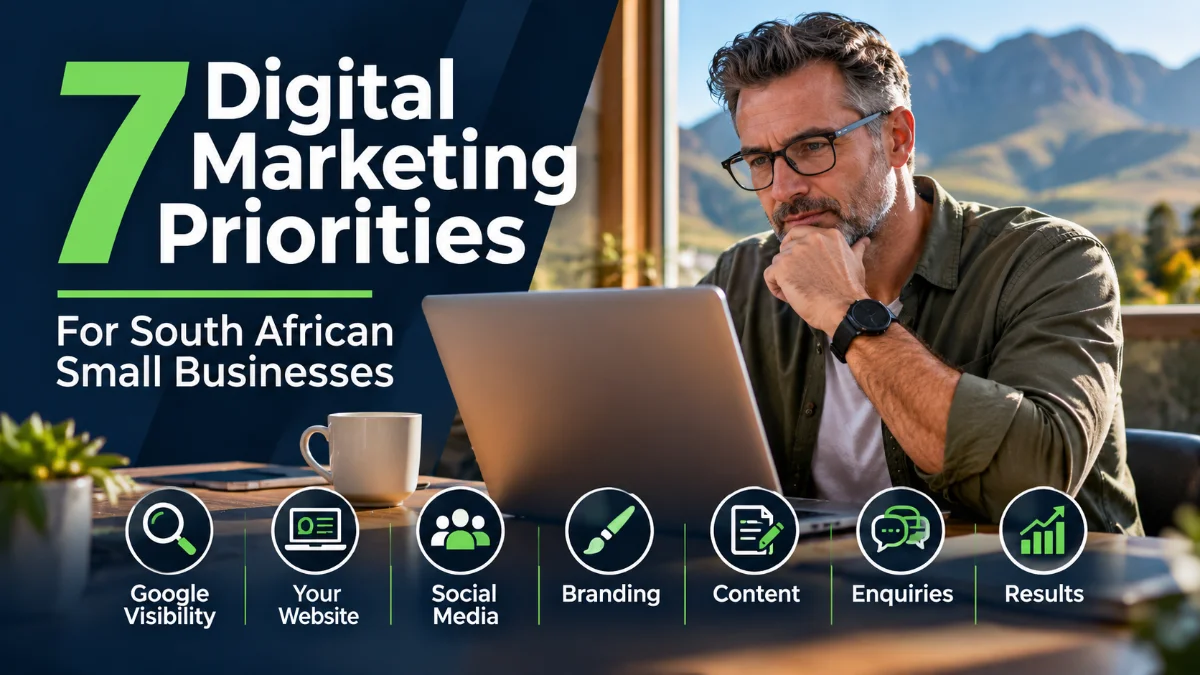
Here are seven priorities worth considering.
1. Make Sure Your Business Can Be Found on Google
When someone searches for a plumber in Worcester, an electrician in Ceres or a guesthouse in Tulbagh, your business needs an opportunity to appear in their search results.
Being active on social media is useful, but it does not replace having a searchable online presence.
Start with the basics:
- Create or update your Google Business Profile, if your business is eligible.
- Check that your business name, contact details and operating hours are accurate.
- Make sure your website explains what services you offer.
- Include the towns and areas you genuinely serve.
- Encourage satisfied customers to leave genuine reviews.
Local visibility is especially important for businesses that depend on customers within a particular geographical area.
Priority: Make it easy for potential customers to discover your business when they are actively looking for what you offer.
2. Make Your Website Work Harder
Your website should be more than an online brochure.
It should help people understand your business, establish trust and make it easy for visitors to take the next step.
Consider these questions:
- Can a new visitor understand what your business does within a few seconds?
- Does the website work properly on a mobile phone?
- Are your services explained clearly?
- Can visitors easily find your contact details?
- Is there a clear way to request a quotation or make an enquiry?
A website doesn’t need dozens of pages to be effective. It needs the right information, presented clearly.
An attractive design helps create a positive first impression, but the real value comes when your website supports your business objectives.
Priority: Focus on generating useful enquiries, not simply attracting visitors.
Read our article on What pages your website should have.
3. Choose Social Media Platforms That Suit Your Customers
Not every business needs to be active on Facebook, Instagram, LinkedIn, TikTok and every new platform that appears.
What matters is being present where your potential customers spend their time.
A local restaurant might benefit from visual content on Facebook and Instagram. A professional consultancy may find more relevant opportunities through LinkedIn.
The important questions are:
- Who are we trying to reach?
- Which platforms do those customers use?
- What content would they find useful?
- Can we maintain a consistent presence?
Posting every day is not automatically better than publishing a few useful, well-planned posts each week.
Consistency, relevance and clear messaging matter more than simply filling a social media calendar.
Priority: Choose the right platforms and create content that supports your business goals.
4. Build Trust Through Consistent Branding
Customers form opinions about businesses long before making contact.
Your website, social media pages, business documents and marketing material all contribute to that first impression.
If your business uses different colours, inconsistent logos, outdated information or conflicting messages across platforms, customers may struggle to recognise your brand.
Consistent branding helps create a professional and recognisable identity.
This includes:
- A clear, readable logo.
- Consistent brand colours and typography.
- Professional images and graphics.
- Similar messaging across your digital platforms.
- Accurate business information wherever customers find you.
You don’t need an enormous branding budget to establish consistency. Start by using the same visual identity and communication style across the places where your business appears.
Priority: Make your business recognisable and trustworthy wherever customers encounter it.
5. Create Content That Answers Customer Questions
One of the most practical ways to improve your online visibility is to answer the questions potential customers are already asking.
Think about the conversations you have with customers.
What do they regularly ask about pricing, services, timelines, products or procedures?
These questions provide excellent material for blog articles, website FAQs, social media posts and email newsletters.
For example:
- A building contractor could explain what affects renovation costs.
- An electrician could discuss when an electrical inspection is necessary.
- A guesthouse could publish a guide to local attractions.
- An estate agent could explain the steps involved in selling a property.
Useful content gives people a reason to visit your website and helps them make informed decisions.
It also gives search engines more relevant information about your business and the services you provide.
Priority: Publish helpful content that demonstrates your expertise and answers real customer questions.
6. Make It Easy for Customers to Contact You
Getting someone’s attention is only the beginning.
If a potential customer wants to contact your business, the process should be simple.
A visitor should not have to search through several pages to find an email address or telephone number.
Depending on your business, useful contact options might include:
- A visible telephone number.
- A WhatsApp enquiry button.
- A simple website contact form.
- A quotation request form.
- A booking or appointment enquiry.
Equally important is what happens after the enquiry arrives.
An enquiry that goes unanswered for several days represents a missed opportunity.
Clear processes for receiving enquiries, responding promptly and following up can make a meaningful difference to your marketing results.
Priority: Remove unnecessary obstacles between customer interest and an actual conversation.
7. Measure Results Instead of Guessing
Digital marketing should support business growth, not simply produce impressive-looking statistics.
Website visitors, social media followers and post impressions can provide useful information, but they don’t tell the complete story.
For most small businesses, the more important questions are:
- How many enquiries did our website generate?
- Which marketing activities brought potential customers to us?
- How many enquiries became paying customers?
- Which services attract the most interest?
- Where are we spending time or money without seeing meaningful results?
Basic website analytics, enquiry records and customer feedback can help identify what is working.
You don’t need a complicated reporting system to start.
Even a simple monthly review of website traffic, enquiries, quotations and sales can reveal opportunities for improvement.
Priority: Measure marketing success by its contribution to your business, not just by online activity.
Where Should Your Business Start?
Trying to improve everything at once can quickly become overwhelming.
A better approach is to identify the weakest part of your current digital presence and address that first.
If customers cannot find you, focus on visibility.
If people visit your website but don’t contact you, improve the website experience and enquiry options.
If you receive enquiries but struggle to convert them into business, review your follow-up process.
And if your marketing activities are taking too much of your time, consider whether a more structured approach would help.
The goal is to build a digital presence where your website, social media, branding, content and customer communication work together.
You don’t necessarily need more marketing.
You need marketing that works together and delivers measurable value.
Is Your Website Helping Your Business Grow?
At Witzenberg Online, we believe a business website should do

Build a website that works as hard as your business does.
Professional web design, practical digital support and a clearer path from online attention to real enquiries.

What Is an All-in-One Digital Solution for Small Businesses?
What Is an All-in-One Digital Solution for Small Businesses? Running a small business means wearing many hats. You're…
Read article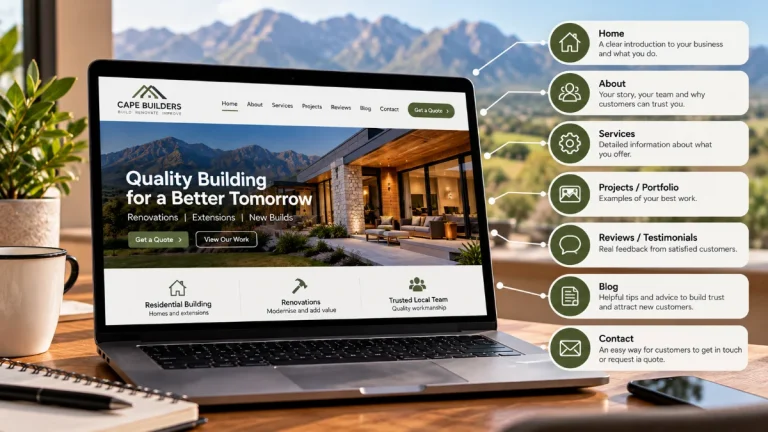
What pages should every small business website have?
What Pages Should Every Small Business Website Have? When a small business decides to build a website, one…
Read article
Why your business needs more than a Facebook page
Why Your Business Needs More Than a Facebook Page For many South African small businesses, Facebook is where…
Read article